
How to Find Who Owns a Wayne County Property
Where Wayne County Owner Information Comes From
| 1 | PROS parcel card | Owner name, property location, mailing address, SBL |
| 2 | County Clerk | Latest deed parties, date, book and page |
| 3 | Parcel Viewer | Map feature and matching parcel attributes |
Use the Clerk again when the sale is recent or names conflict.
Start with the Wayne Situs
Open the PROS Quick Search and enter the street number plus the core road name. A contains search works well here. Run it without the street suffix, and it can catch however the address was stored. Pick the matching record by municipality and property location. Then copy the SBL. Wayne postal labels do not always match the town doing the assessing, so trust the assessing jurisdiction over the mailing line. The official search screen itself offers address, tax map, owner, Street Finder, and municipality fields.
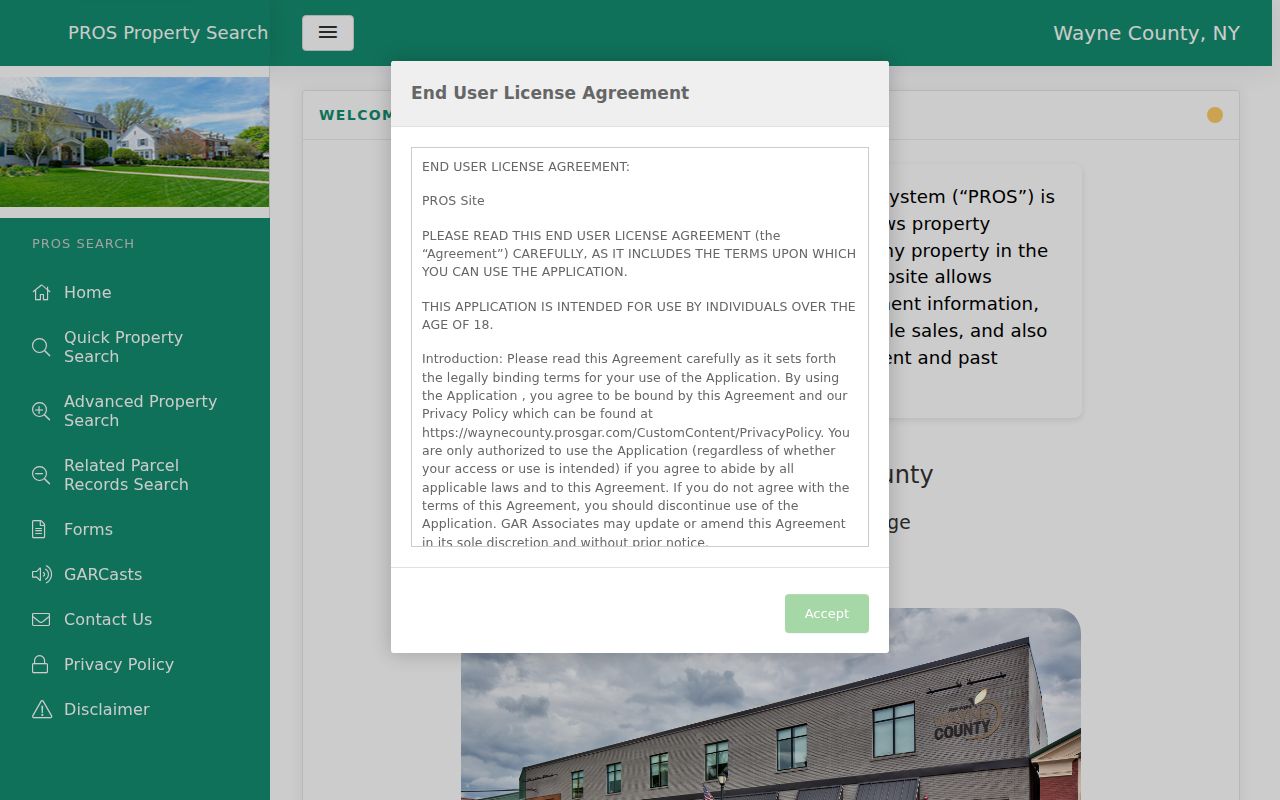
Those alternate keys help resolve an address before anyone pins an owner on the wrong lot.
Read Every Wayne Owner Row
A Lyons parcel card shows how this works, with two owners listed in separate rows. Multiple rows can mean co-ownership or simply the way the tax roll stores names. Copy every row, and keep the punctuation and suffixes intact. Then read the property location apart from the mailing columns. A mailing address only tells you where notices go. It does not say who occupies the land. The sample parcel card lays out these fields. Beside them sit the SBL, deed book-page, sale data, values, and building facts.
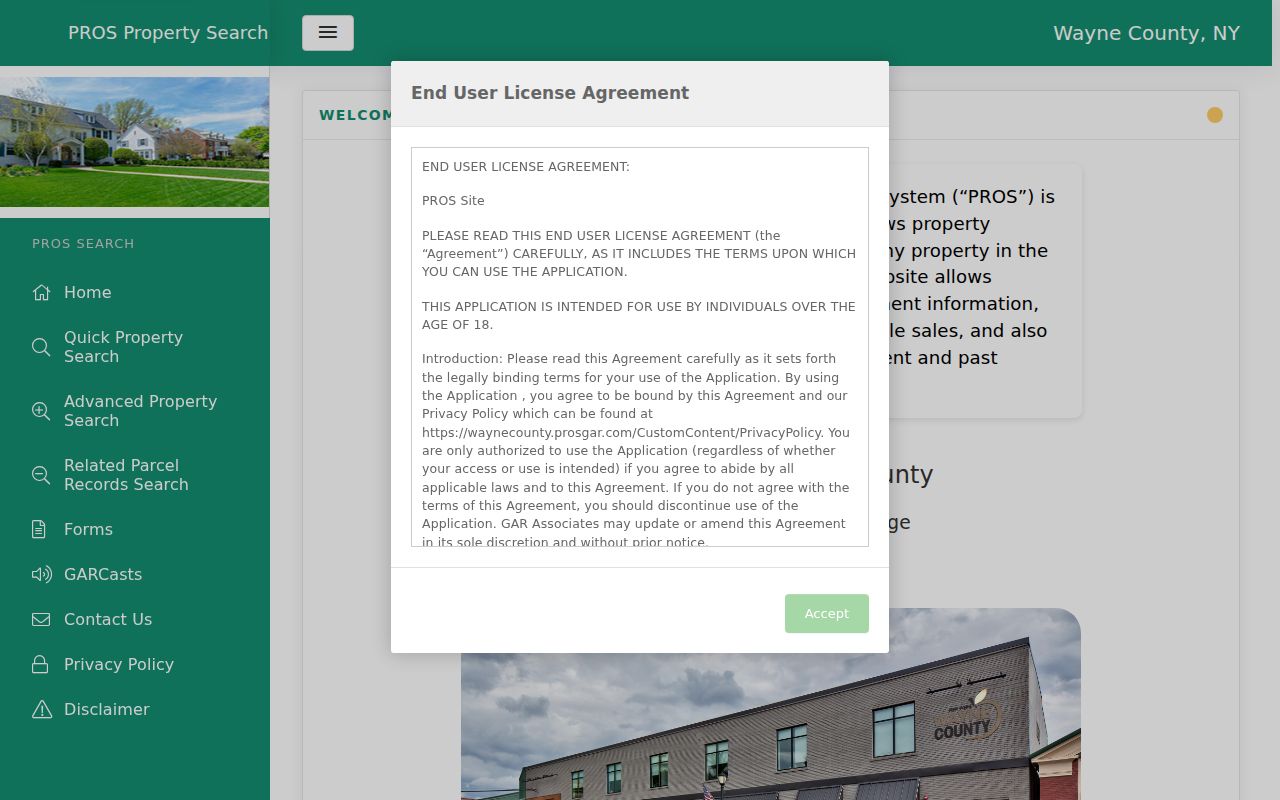
Reading the full card keeps a one-name result from hiding a second recorded owner row.
Check Last Sale and Prior Owner
The last-sale block gives a transfer date, price, prior owner, and usability flags. Treat it as a bridge into deed records. Do not treat it as proof on its own. In the Lyons example, the $165,500 sale is marked not usable and not arm's length. That label affects value analysis. Yet the recorded transfer still stands. If the new owner's entry is missing, search the prior owner's name instead.
- Copy the current owner spelling and SBL.
- Record the last sale date and prior owner.
- Use deed book 923 and page 94364 from the sample as the model for a Clerk cross-check.
- Confirm the legal description refers to the selected parcel.
Confirm the Newest Wayne Deed
The free Clerk system is an index only. It does not include free images. Search both grantee and grantor names around the sale date, compare document type and book-page, and pull the image whenever deed language matters. The current grantee is normally the buyer. The grantor is the prior owner. Estates, trusts, life estates, and quitclaim deeds can make ownership look more tangled than one buyer name suggests. A just-recorded deed may show up in the Clerk index before the annual roll, the PROS owner row, or GIS attributes catch up. Wayne County publishes no fixed numeric update lag, so note your access date.
Owners Hidden by Entity Names
An LLC, corporation, trust, or estate can hold title instead of a person. Search the entity exactly as printed. The New York corporation database can confirm an entity record, while Surrogate's Court can explain an estate transfer. Both add context. Neither replaces the deed. Keep any trustee or fiduciary label too, because it states the capacity in which a person acts.
- Situs
- The physical property address.
- Mailing address
- The destination used for owner notices.
- Owner of record
- The owner shown in a specified official record as of its update.
- Title
- The legal rights in land, which require more than an assessment lookup to evaluate.
GIS Verifies the Parcel
The Wayne Parcel Viewer exposes SBL, PRINT_KEY, owners, mailing fields, deed book-page, values, and geometry. Match several fields before trusting its owner name. GIS earns its keep when a road crosses a town line or the same street number shows up twice. Parcel polygons and tax maps serve tax and research purposes only. They are not conveyance surveys, and an owner attribute is not a title opinion. Splits, merges, and the active parcel-fabric review can also shift identifiers.
Know When to Escalate
Ask the County Clerk about a missing recent deed, a certified copy, a historic volume, or a murky index entry. The assessor handles owner rows, mailing data, exemption entries, and roll years. For rights, exceptions, lien priority, or a transaction, use a title professional. A disputed line calls for a licensed surveyor.
Lawful use. Property owner information supports due diligence and civic research. It must not be used to harass, target, or harm anyone.
Fraud Guard can alert a saved name to later filings, using the full surname and the first three letters of a given name. An alert invites review; it neither blocks nor validates a filing.
Wayne Estate Ownership
A deceased owner's name can linger in an assessment system. The deed and roll processes must catch up. Wayne County Surrogate's Court records may name an executor, administrator, will, or estate proceeding. That explains who has authority to transfer. New York vital records carry their own access limits and genealogy thresholds. A deed search should never assume every death record is open.
Follow the estate trail back to the recorded instrument. A fiduciary deed shows how the interest left the estate. The probate file explains the representative's role. Preserve the capacity after the name. A person acting as executor is not necessarily conveying personal property. The recorded deed, read together with the court file, is what settles the question.
Wayne Ownership Evidence Bundle
Building a solid ownership answer for a Wayne County parcel means pairing several records. Pull the PROS parcel card. Get the newest deed from the Clerk's index, along with the matching deed image. Add the GIS feature and the relevant final tax roll entry. Those pieces back each other up. A Surrogate's Court filing belongs in the bundle in some cases. The same goes for a lien, foreclosure, or auction record. Include those only when they truly affect who holds title. Note the date you viewed each live record.
Conflicts deserve to stay visible. Say the deed shows a fresh grantee while PROS still lists the grantor. Describe both records and their dates rather than quietly picking a favorite. A GIS map can have the right parcel number but a stale owner of record. It can still confirm geography. It proves nothing about title, though. Sometimes a legal description covers only part of the mapped lot. In that case, track down the right plat maps. Then get professional review.
Date the Wayne Owner Answer
Keep the parcel number with every citation. That habit lets anyone repeat your Wayne County property search later. Also state which source showed the owner. Note when you checked it. A claim like "PROS displayed this owner on the access date" says plenty. It beats a bare, undated assertion. If a sale closed recently, add the newest deed's recording date. Include the grantee's name too. This small discipline separates a current recorded transfer from an old tax roll row. It also makes later verification far easier for whoever comes next.