
Tracing Former Owners of a Wayne County Property
| Current deed | Prior owner to current owner | Date, type, book-page, legal description | Search the grantor as an earlier grantee |
| Prior acquisition | Earlier owner to that grantor | Same complete field set | Repeat under the next grantor |
| Historic link | Party names in older index | Volume, page, map, locality terms | Move to historical books or archives |
Start with Wayne PROS
The last-sale block on a parcel card can name a prior owner and supply the current deed book-page. That is only a starting point. Confirm the transfer in the County Clerk index. Verify that its legal description fits the parcel. The Lyons sample links a present parcel to a prior-owner field and deed book 923, page 94364. The official sample parcel shows the owner, prior owner, sale, SBL, and deed reference together.
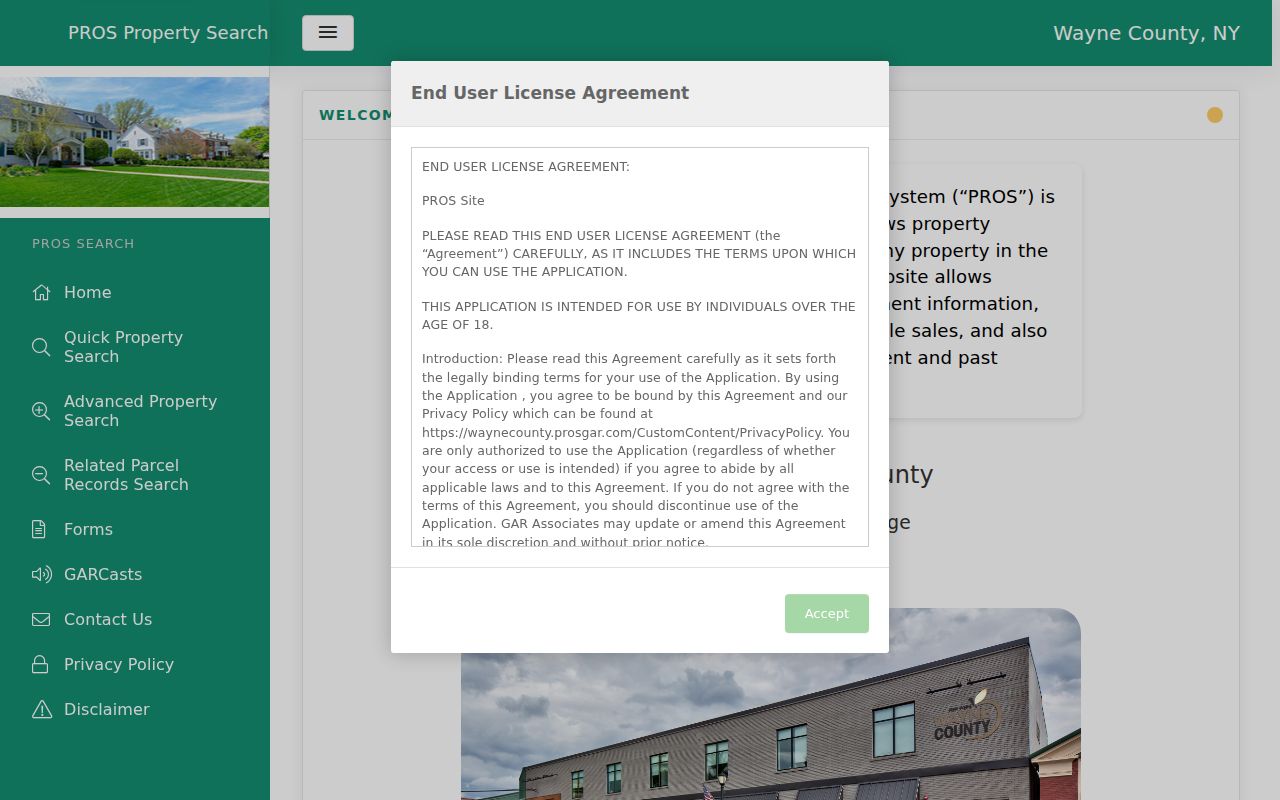
That bundle supplies the first bridge from an assessment record into the deed chain.
Search Grantee Then Grantor
Open the newest deed and copy both parties exactly. The current owner is usually the grantee. Search that grantor as an earlier grantee to find how the land was acquired, then repeat with each new name across a reasonable date range. Keep document type and spelling variants in view throughout.
- Anchor the property with situs and SBL.
- Verify the newest deed's legal description.
- Search its grantor in the grantee index.
- Open that acquisition and repeat backward.
- Log gaps rather than guessing across them.
Use Wayne Historical Categories
The Clerk's Historical Index separates Historical Deeds, Deeds Grantee, Deeds Grantor, Transcribed Records, mortgages, maps, liens, and sheriff-sale books. Pick the branch matching your citation. An old book-page search differs from a name search. The historical category screen displays those paths.
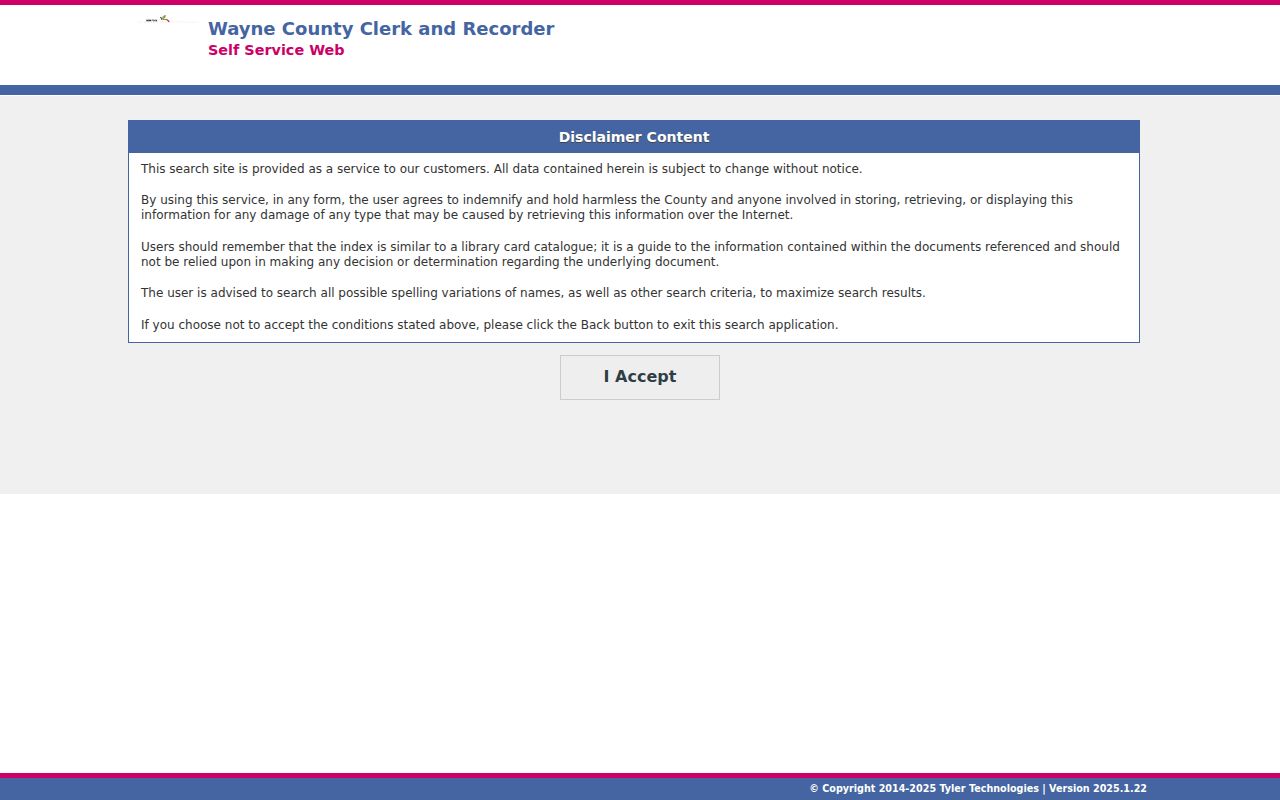
Grantor and grantee branches back the two-direction name check a sound chain needs.
Reconcile 1825 and 1981
The free recorder banner runs from January 1, 1825. A county summary describes modern deeds from 1981. The two dates describe layers of access rather than a promise that every image and search method is uniform across two centuries. The county publishes no exact year cutoffs for each historical category.
Online depth. When a year or series disappears, contact the Clerk for the right index, deed book, transcribed record, or copy route.
Match Land Not Just Names
Names repeat and change spelling. Owners can also appear through estates or entities. Book-page, municipality, map reference, adjoining-owner calls, lot number, and legal description keep the chain on the same land. A later parcel split may give each child lot a new SBL even though the older deed described one parent tract.
- Chain of title
- The linked sequence of transfers affecting the land.
- Reverse index
- An index organized to search the opposite party role.
- Quitclaim deed
- A conveyance of whatever interest the grantor has without a broad title promise.
- Plat
- A recorded map that can connect old lot references to present parcels.
Former Wayne Village Names
Older records may use Lyons, Macedon, or Savannah as village labels even where the present municipal structure differs. Search the historic term and the current town. Geography shaped the old descriptions. Lake Ontario, Sodus Bay, the Erie Canal, orchard lands, and agricultural districts all appear. Canal lots and water lines persist. Road names, map books, neighboring landowners, dates, farm tracts, and district references solve a place-name mismatch better than a ZIP code.
Archives Fill Wayne Gaps
The Wayne County Historical Society research room, county historian, New York State Archives, libraries, and newspapers can supply map, directory, and local-name context. Treat them as finding aids. Confirm every conveyance in the Clerk's record. The Historical Society research page explains its collection and contact route.
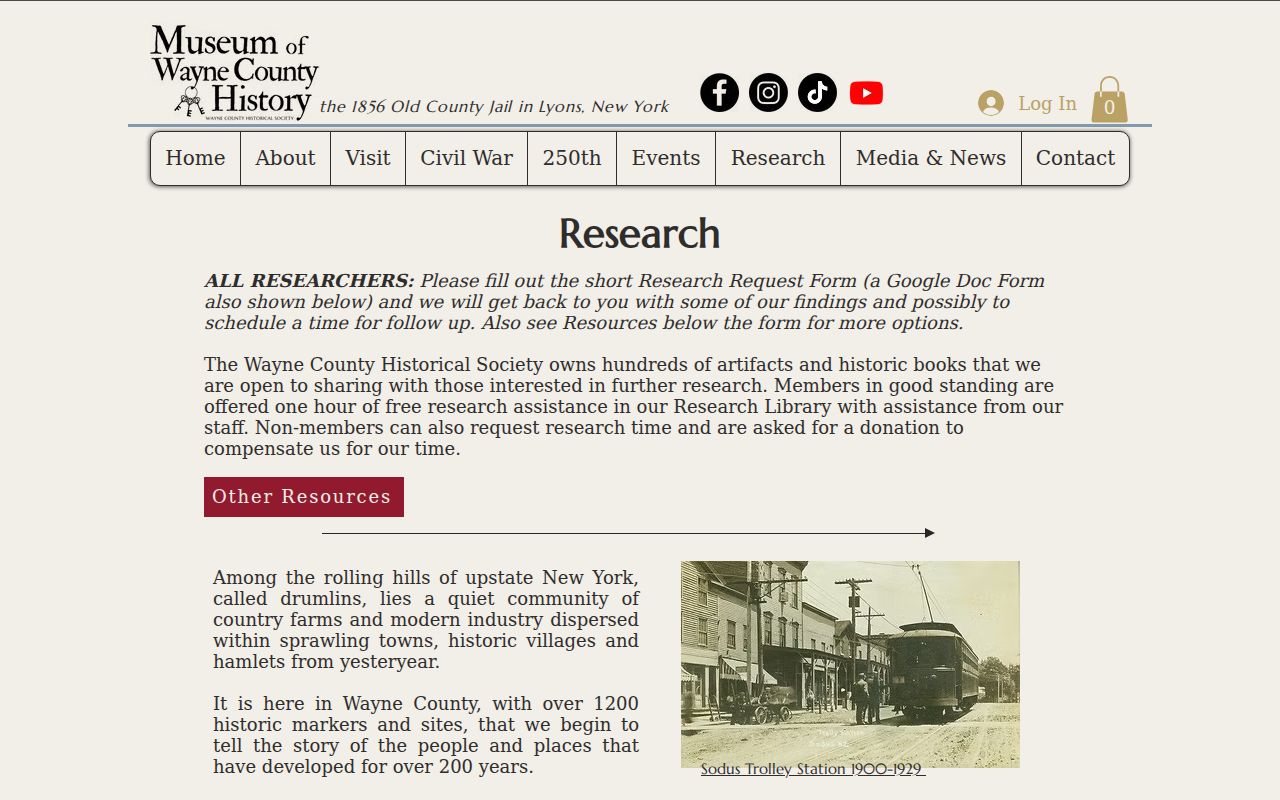
Local sources matter most when an old place name or family link explains why a deed index search failed. That is when context wins.
Maps Explain Wayne Chain Breaks
A clean surname chain can appear to end when the land, not the owner, changed. A map may turn a farm into numbered lots. A split, merge, or lot-line adjustment can replace the SBL. Search recorded maps, deed legal descriptions, parent parcels, and adjoining-owner calls when the current parcel number fails in older records. Tax maps follow the March 1 status date. They are expressly not conveyance surveys. Use them only to locate likely records. A recorded plat shows created lots, while a deed states the conveyed interest, and a survey may be needed to connect monuments and calls to present ground conditions.
Wayne Estate and Sheriff Transfers
Not every transfer uses a warranty deed. Executors, administrators, trustees, tax proceedings, foreclosure, and sheriff sales create different instruments and index paths. The Historical Index includes sheriff-sale books. Surrogate's Court can explain a fiduciary's authority. Log the deed type and capacity after each name. If an executor is the grantor, search the deceased owner and the estate case as well. If a sheriff or public officer appears, locate the court or sale file, then return to the recorded deed for the legal description.
Preserve a Wayne Owner Timeline
A useful timeline has one row per verified transfer: execution date, recording date, grantor, grantee, deed type, book-page, legal description cue, and source link. The two dates can differ. Keep both. Sorting by only one date may make the chain appear out of order. Never paper over gaps with a likely family relationship. Directories, newspapers, genealogy records, and local histories can suggest identity, but a suggestion is not a conveyance. Recorded ownership and local context deserve separate citations.
Stop at a Wayne Gap
Stop whenever a Wayne County transfer cannot be verified. Label the gap plainly and carry the chain forward only with qualified language. A surname that looks right is not proof. Neither is a directory listing. Nor is a neighboring deed in the Wayne County deed records. None of these substitutes for the missing conveyance itself. Before linking the two sides of the chain, ask the Clerk first. Ask for the volume, the reverse index, or the transcribed series that covers the parcel number in question.